
Dedicated in 1966, McDermott Court existed for 65 years as a large open space, mostly paved and generally exposed to the sun, with a circle of grass (known as “the Dot”) at its center. In 2024, the Office of Campus Planning (OCP) hired the award-winning landscape architecture firm Mikyoung Kim Design (MYK) to reenvision the austere space and create a solution that would align with MIT’s goals and respond to community input. Through this initiative, McDermott Court is now finding new life as a welcoming, pedestrian-oriented space with curving paths, an ecologically diverse meadow crowned by drifts of native wildflowers, and a fully restored grassy Dot. The Dot is scheduled to reopen late spring 2027, and the meadow is expected to reach full maturity by 2029.
Community Engagement
The transformation of this space was informed by robust community outreach OCP and MYK conducted in April 2024 to explore priorities and opportunities for the revitalization of the open space in Eastman and McDermott Courts. The project team invited the MIT community to participate in in-person conversations and focus groups as well as an online survey. This public engagement effort, summarized in a report linked on the project page, gained insights and perspectives from more than 800 responses from students, staff, and faculty, including occupants of buildings surrounding the courts, as well as campus visitors.
Designing a Natural Environment to Support Health and Sustainability
In transforming McDermott Court, MIT and its design partners are responding to community enthusiasm for a greener space that is more welcoming and human oriented as well as the Institute’s interest in sustainability, safety, and resiliency. A global landscape architecture and urban design studio, Boston-based MYK uses a biophilic approach to create spaces that bring people together, integrating nature and natural elements into the built environment to improve human health and wellbeing. To design and install McDermott Court’s new plantings and courtyard meadow, MIT and MYK are working with local landscape architecture and horticulture firm Offshoots Inc., known for creating pollinator-friendly, biodiverse native wildflower meadows that with care become largely self-sustaining over time.
| Landscape Features | Project Benefits |
| Planting beds, permeable pathways, and a meadow of native plants and wildflowers restore greenery, color, and growth to the space, adding beauty and vitality. | These elements replace the extensive paved areas around the Dot, cooling the open expanse, improving drainage, and reducing the urban heat island effect. |
Playful pedestrian-only paths enable easy, relaxed wandering in a space where vehicle travel is limited. To support social gatherings or outdoor classes, the space includes comfortable seating for taking a break or working outdoors. | The permeable pathways enhance pedestrian safety and circulation as well as site drainage. The replacement of worn and uneven pavement reduces puddles and improves accessibility. Authorized vehicle movement is slowed with more defined vehicular zones shaped by planting beds and curbs. The space is activated for social uses and can also accommodate Institute events. |
The meadow environment is a series of low, concentric landscape mounds surrounding the Dot, like ripples in a pond, and open sight lines are maintained to the existing artwork and to the river. From early spring blooms to fall colors, the meadow plant species will create seasonal changes of color and texture, providing year-round interest. | The native and regional plantings improve biodiversity on campus and can safely take root and thrive on the mounds. Here, the soil depth and open sunlight will support meadow growth. Another goal of using a native and naturalized planting palette is to reduce maintenance and irrigation needs over time, resulting in a more sustainable landscape. |
The restored Dot and its surroundings provide a flexible space that can accommodate a range of social activities, such as working between meetings or unwinding with friends and colleagues. Natural elements are incorporated and supported, creating a space that is visually interesting and invites a moment of contemplation or simply being in nature. | The historic 1960s design is maintained through updates that advance sustainability and resiliency. |
What goes into building a native meadow?
First, the soil must be prepared and installed – one of the most demanding parts of the process. In keeping with the design, the goal is to create conditions that suit native meadow plants, many of which grow well in relatively lean soil.
Selecting the live plant species and seed mix also requires considerable thought to identify native New England and Eastern North American plant species that support pollinators, birds, and other wildlife while also providing flowers and foliage interest throughout the growing season. Preference is given to native plants that are well adapted to the local climate and can withstand the region’s cold winters, spring rains, summer heat, and occasional drought.
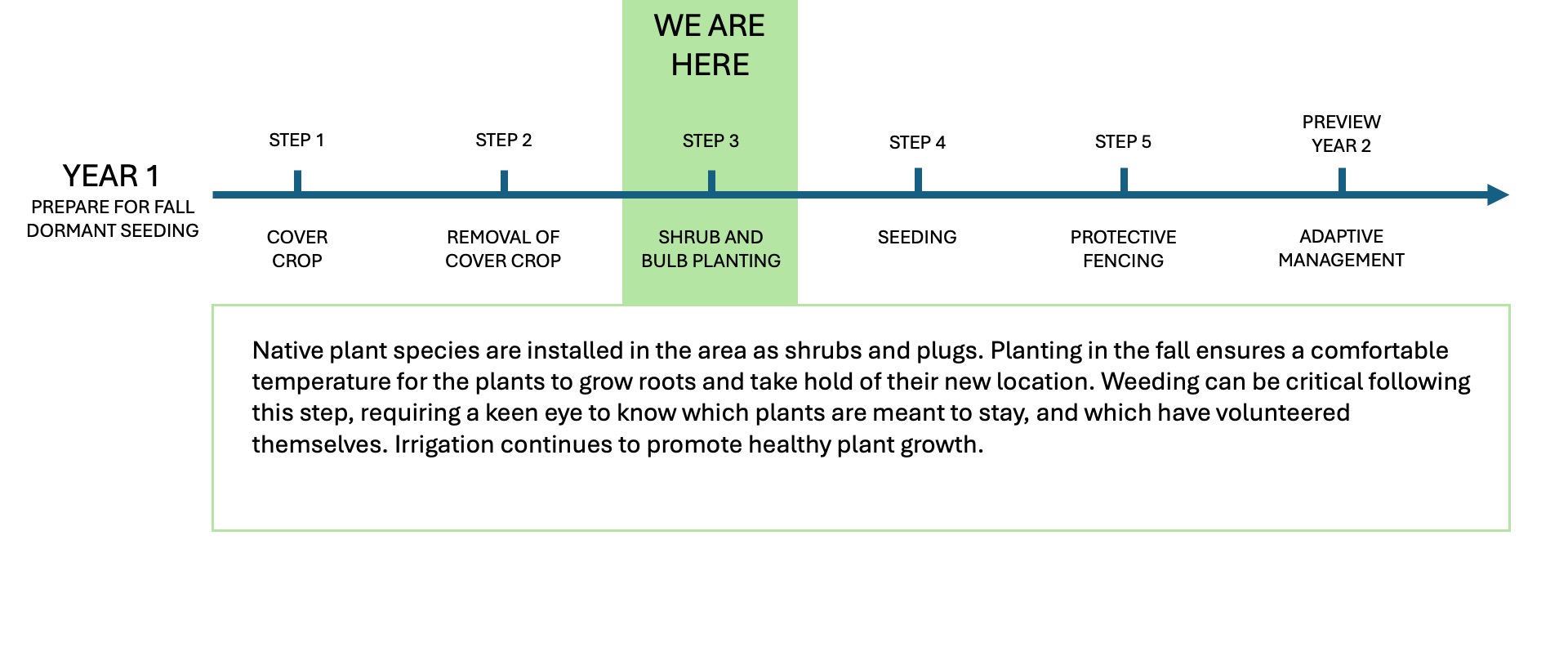
Once the live plants and seed mix are installed, the meadow takes a few years to grow and take hold. The first year may look sparse, since many perennial wildflowers expend their early energy to develop roots, and plants may need to be cut to deter weed pressure.
After some time and patience, the meadow will become more self-sustaining, with less seasonal maintenance and fewer inputs required. Its plantings will provide food and shelter for bees, butterflies, and birds, while offering aesthetic and therapeutic value. The meadow’s seasonally evolving palette of plants will include black-eyed Susan, goldenrod, bee balm, milkweeds, mountain mints, and native grasses such as little bluestem.
Timeline
The meadow is expected to reach full maturity in about three years (by 2029), after which it will require less maintenance and become largely self-sustaining. The Dot lawn is scheduled to reopen in late spring 2027.
Some key milestones:
- April 2024: Outreach to MIT community to solicit input on renewal of Eastman & McDermott Courts
- Fall 2025–Spring 2026: Landscape design work
- Summer–Fall 2026: Construction and planting of new meadow
- 2026–2028: Growing seasons will include seeding of existing native grasses, regular weeding, and plant care
- 2029: Meadow should be fully established
Project Team
- Landscape architect: Mikyoung Kim Design with horticulture design support from Offshoots, Inc.
- Construction Manager: Consigli Construction
- Meadow installation and management: Offshoots, Inc.
- MIT Team: Office of Campus Planning – Todd Robinson, Laura Tenny; Campus Construction – Kevin Carr